Skip to content
THYSSEN STORE
STORE DESIGN

When Plutarco was commissioned to design new furniture for the Thyssen Museum’s temporary exhibition shop, the studio sought to create a system that would adapt to the needs of this unique space dedicated to product sales. Every exhibition is different, and the products created for these shows—books, limited-edition items, clothing, jewelry, posters, and more—are unique as well. For this reason, the Plutarco team set out to design furniture that could adapt and transform according to the needs of each exhibition.

The initial concept and starting point was a limited color palette, so that the setting would serve as a harmonious and cohesive backdrop, allowing the content to take center stage. To achieve this, the materials were limited to three main elements: recycled acrylic, wood, and stainless steel.

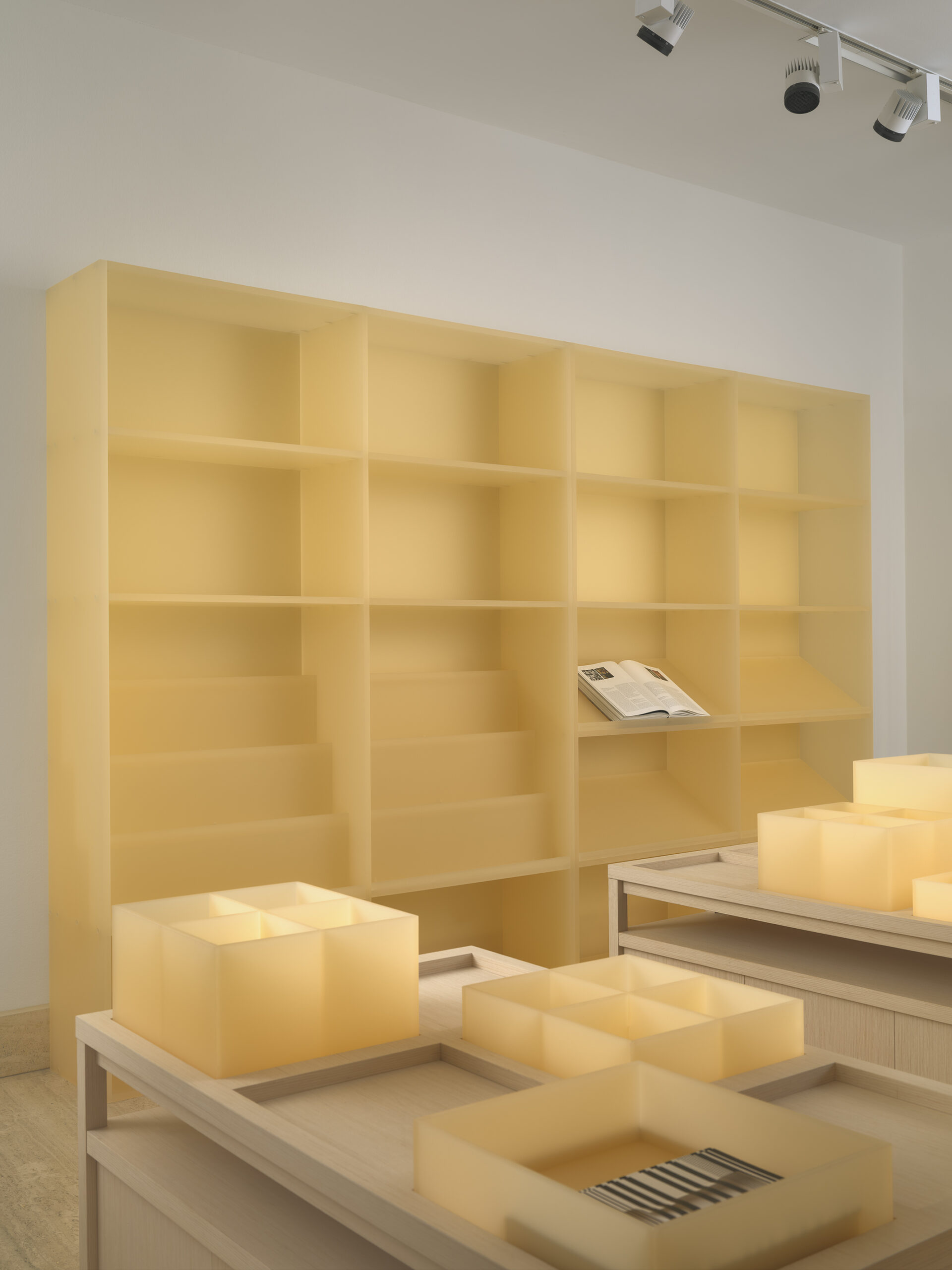
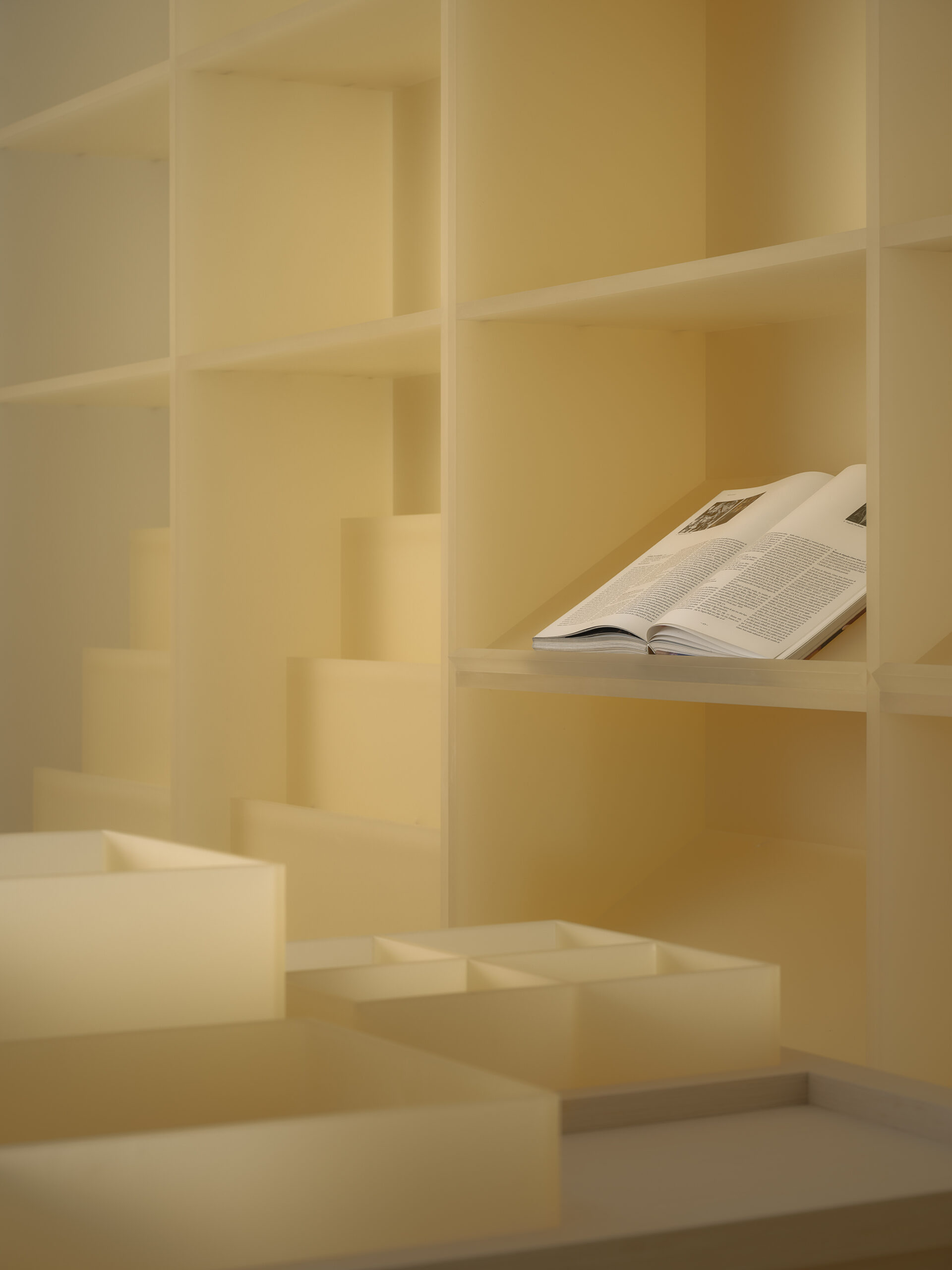
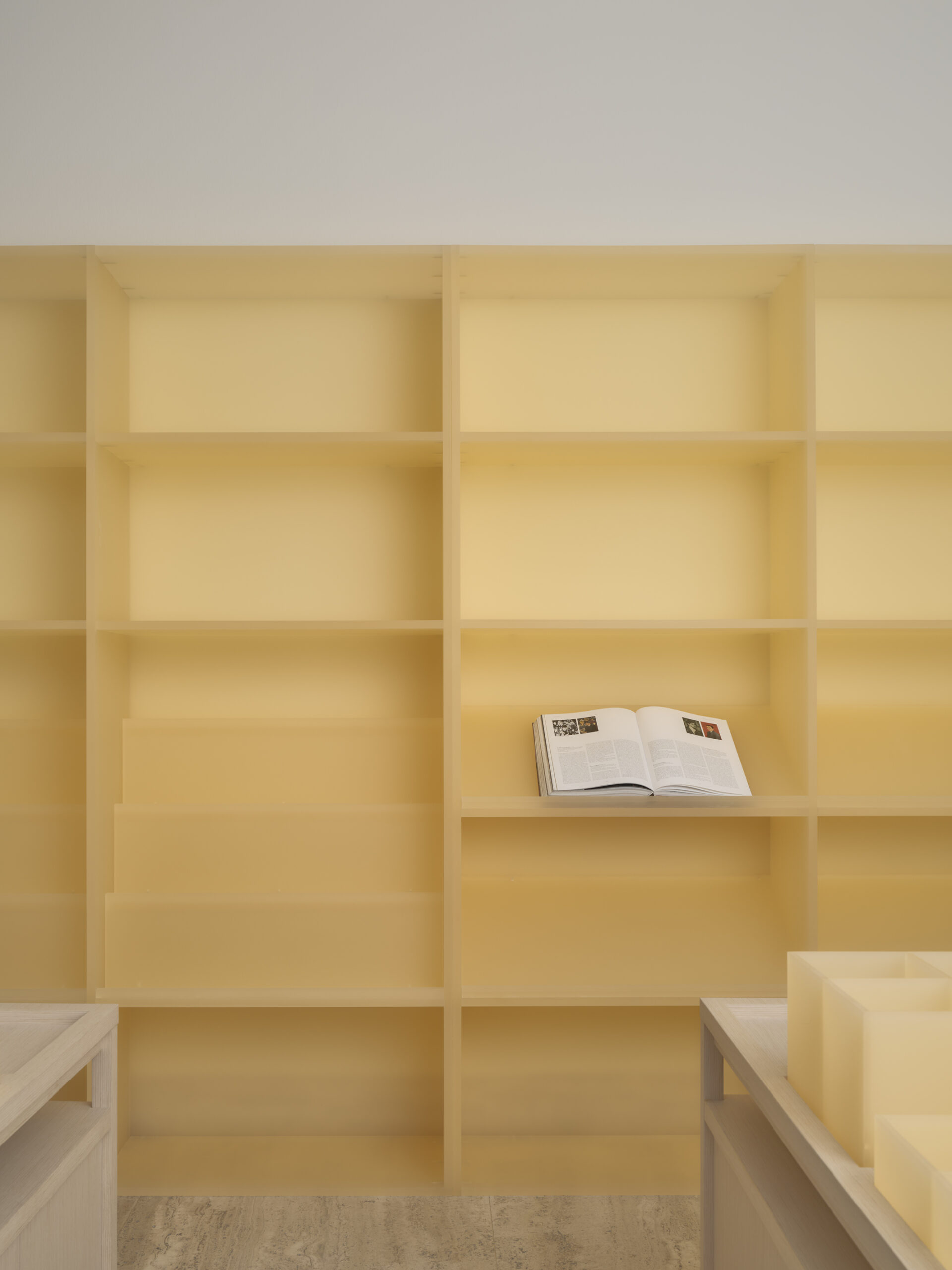
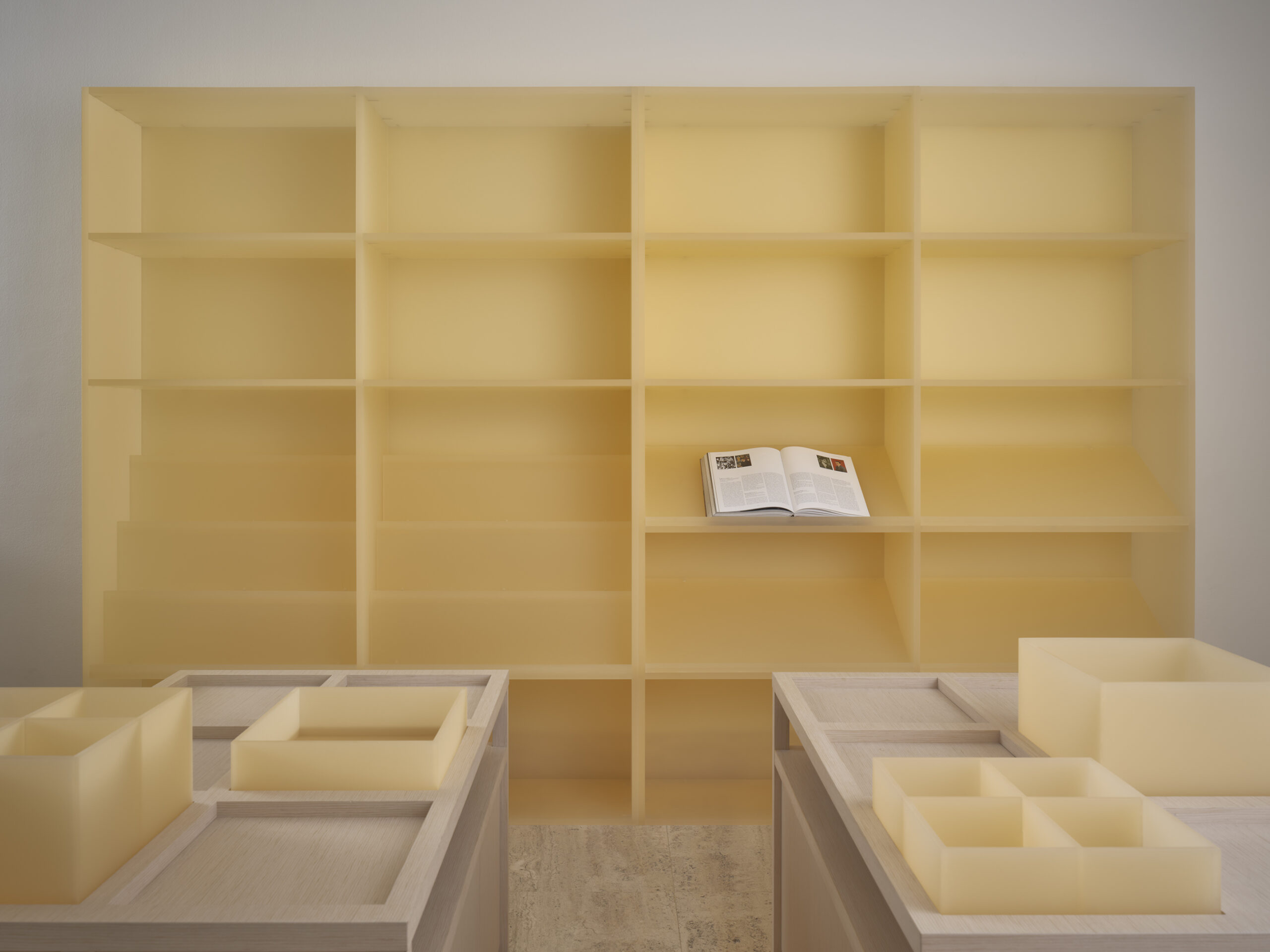
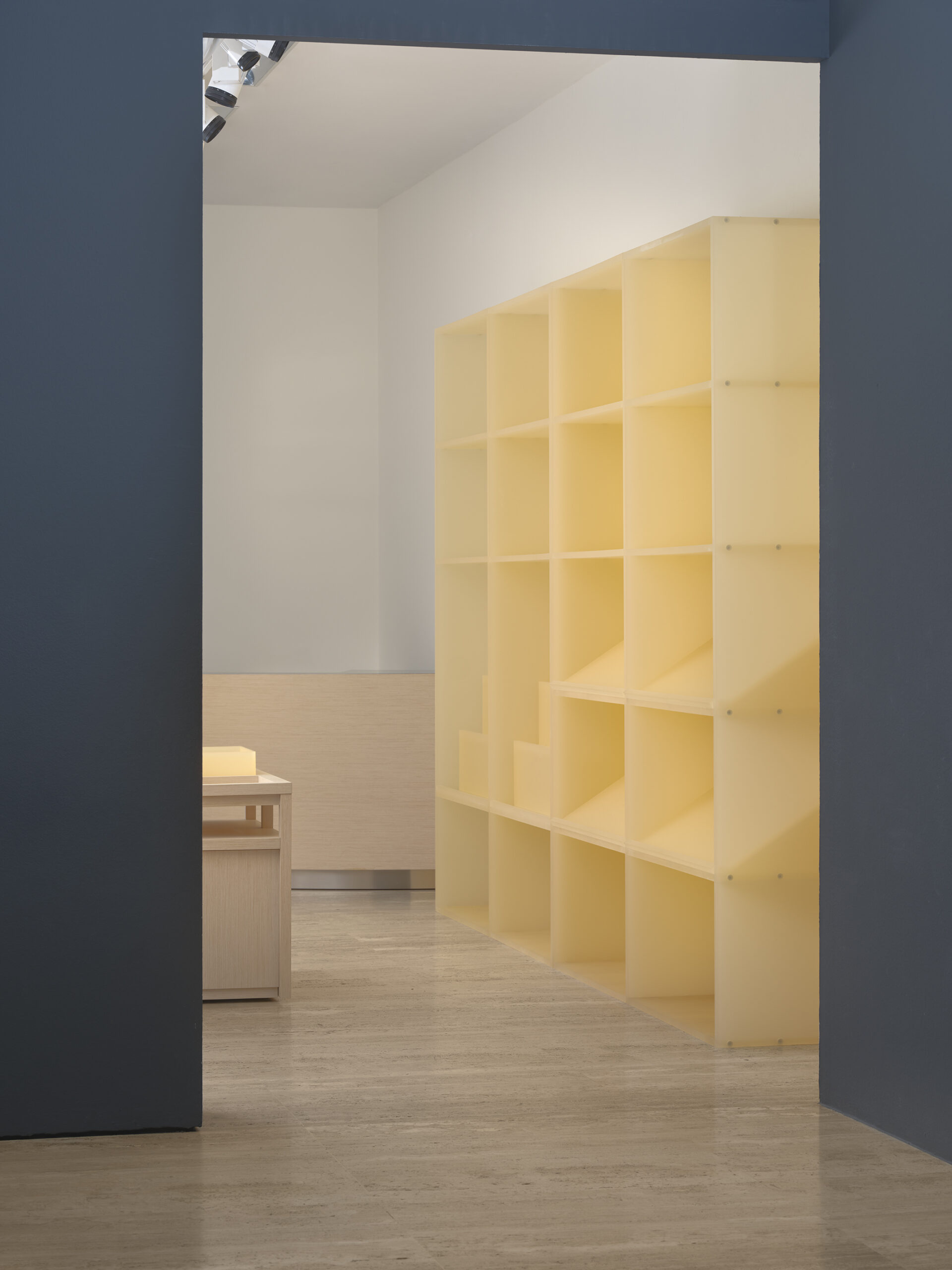
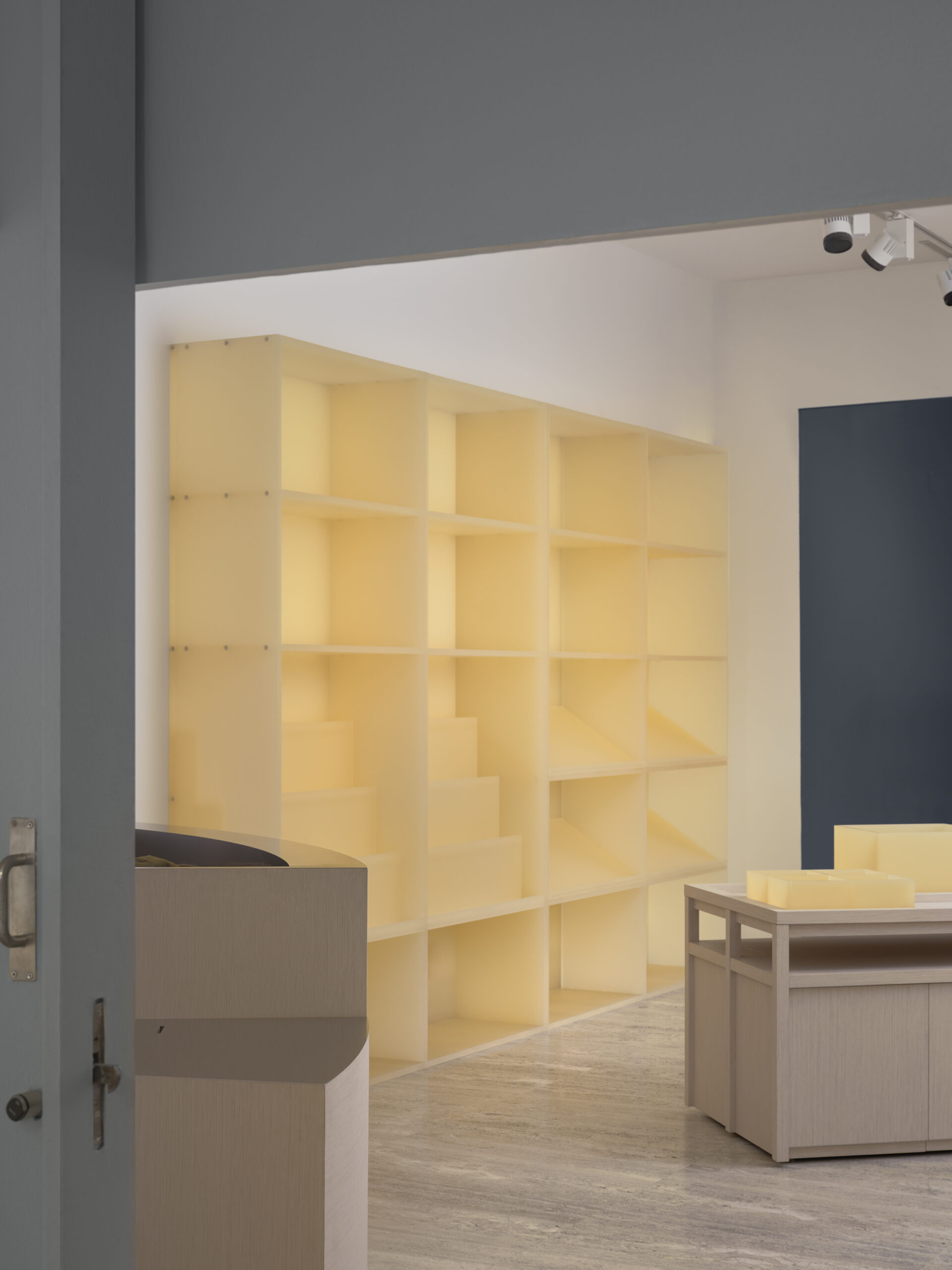
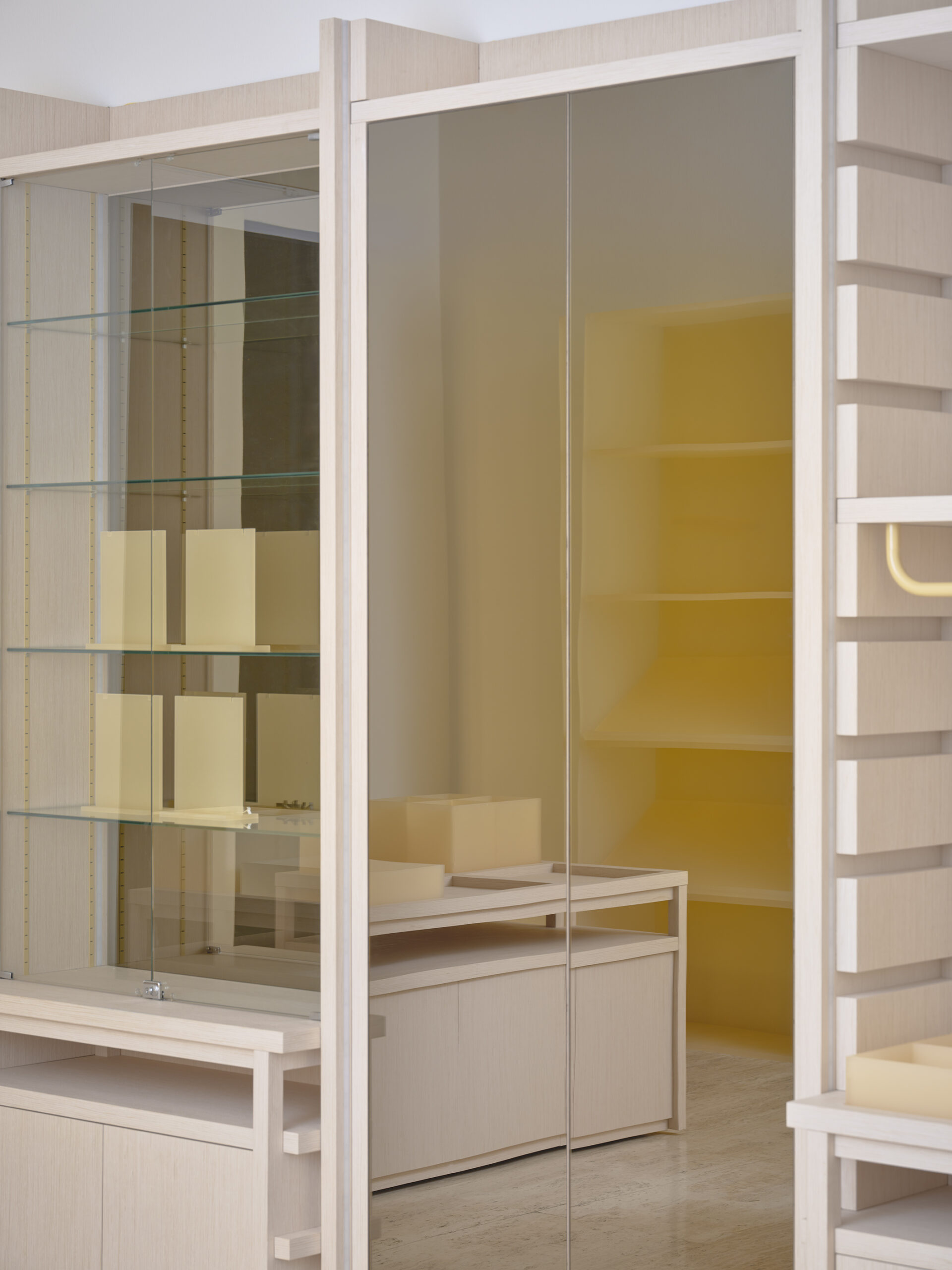
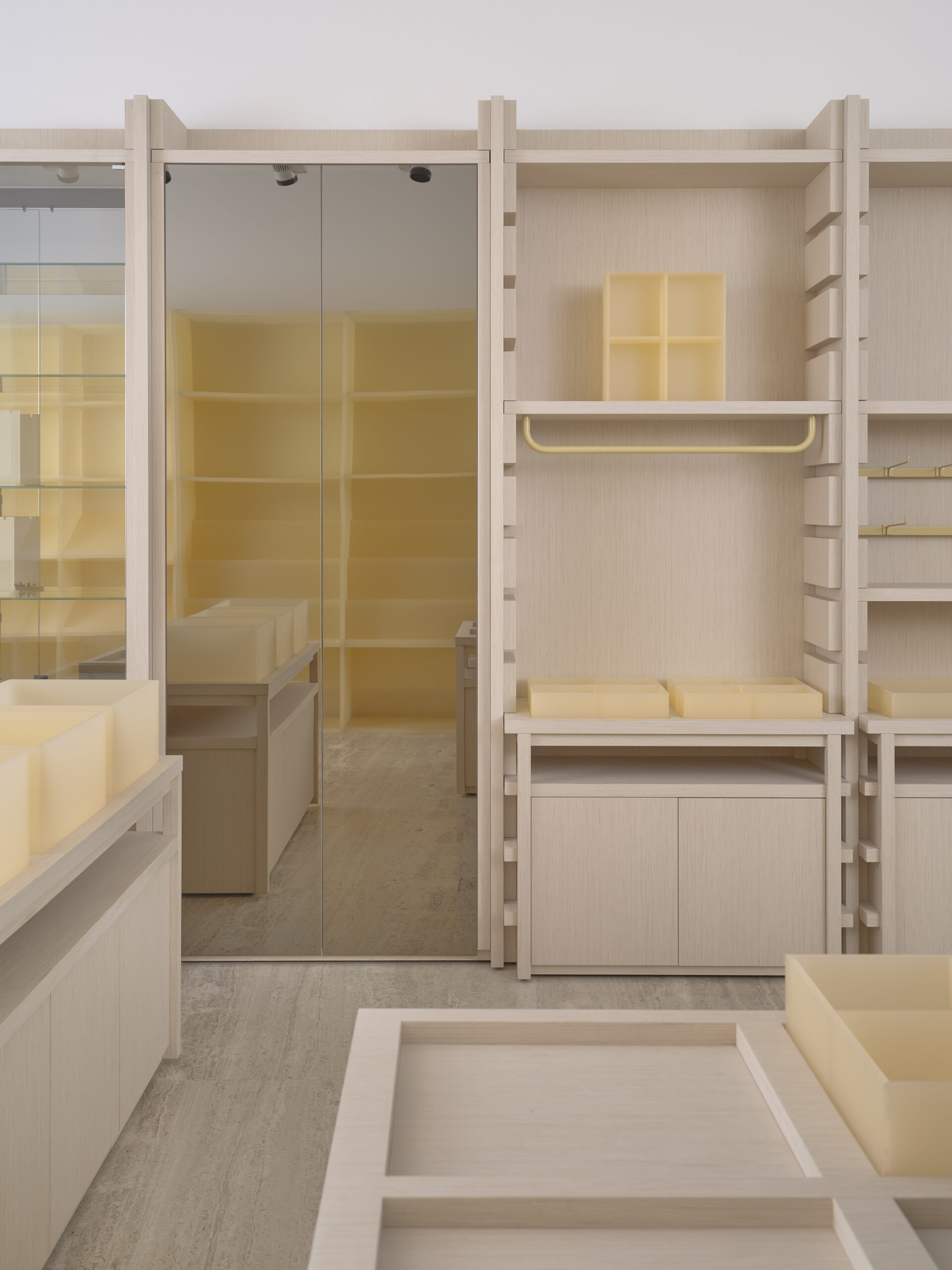
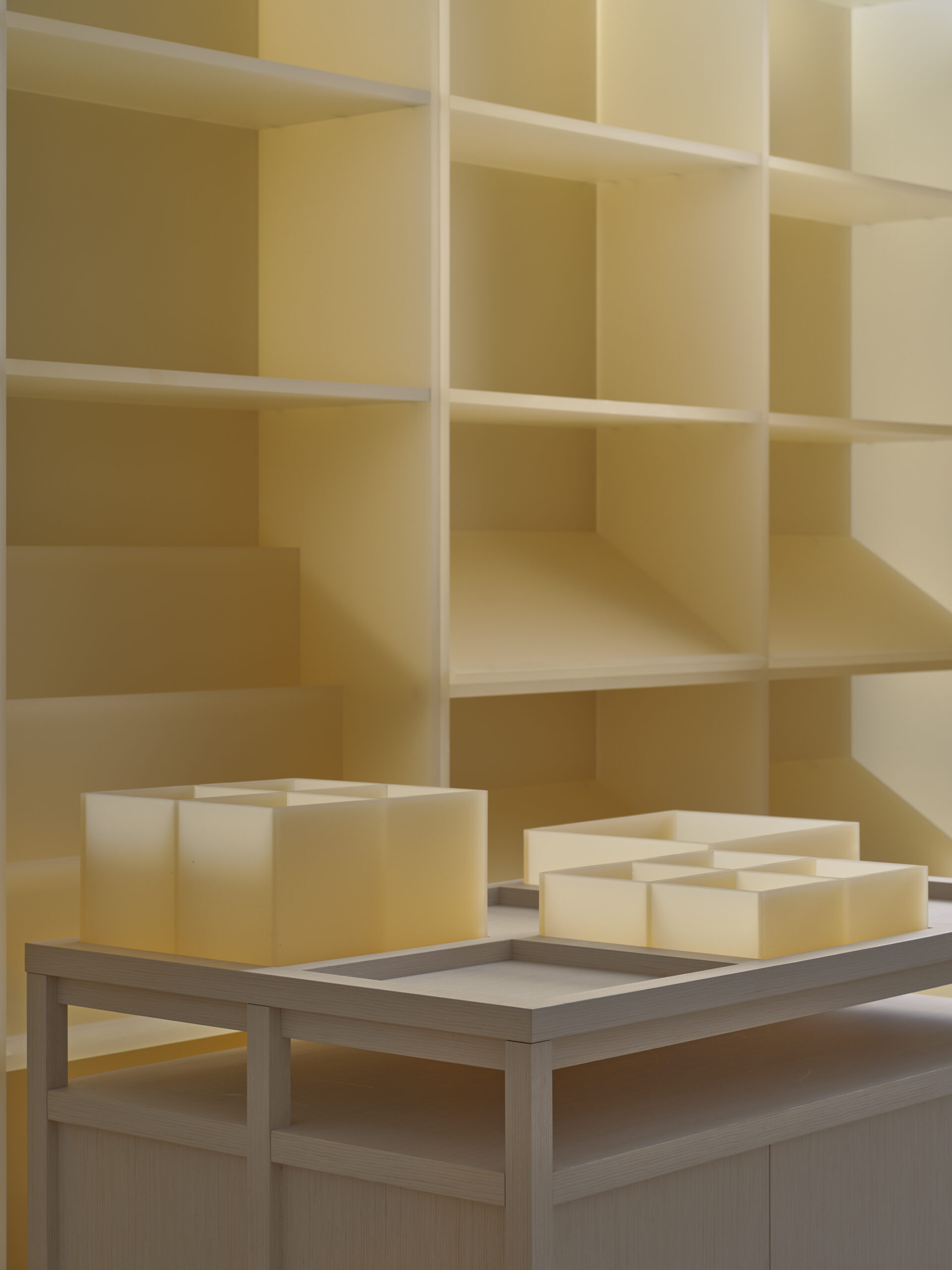
The bookshelf dominates the space with its surprise effect, standing like an ethereal sculpture thanks to its translucent quality and butter-yellow color. The 25-mm-thick methacrylate is recycled, locally sourced (manufactured in Catalonia), and unconventional. Its color is custom-made: it was designed with a certain degree of translucency to create that “frost” effect that blurs the material’s edges when it comes into contact with light. Additionally, it features an impact- and scratch-resistant finish and high rigidity.

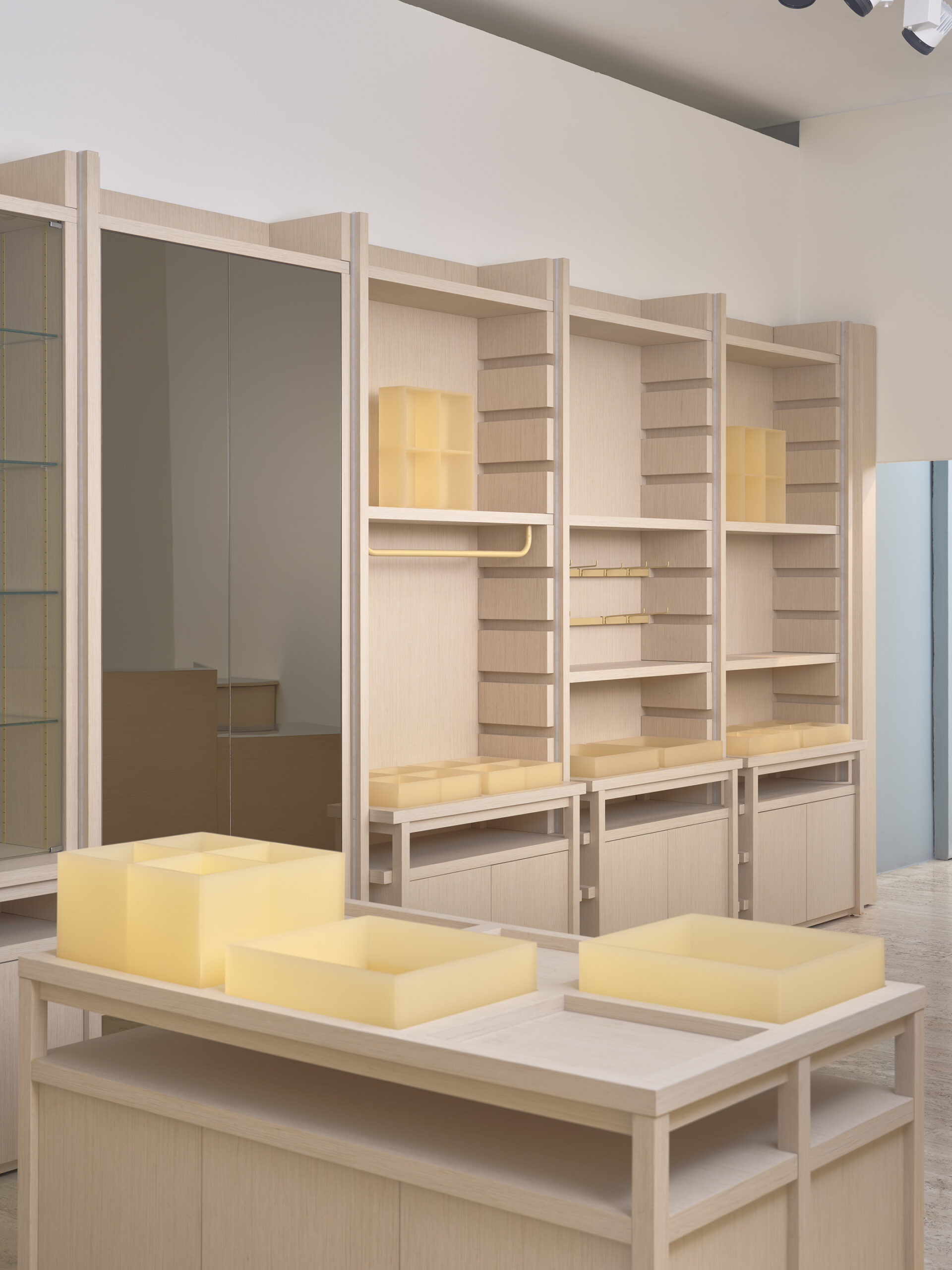
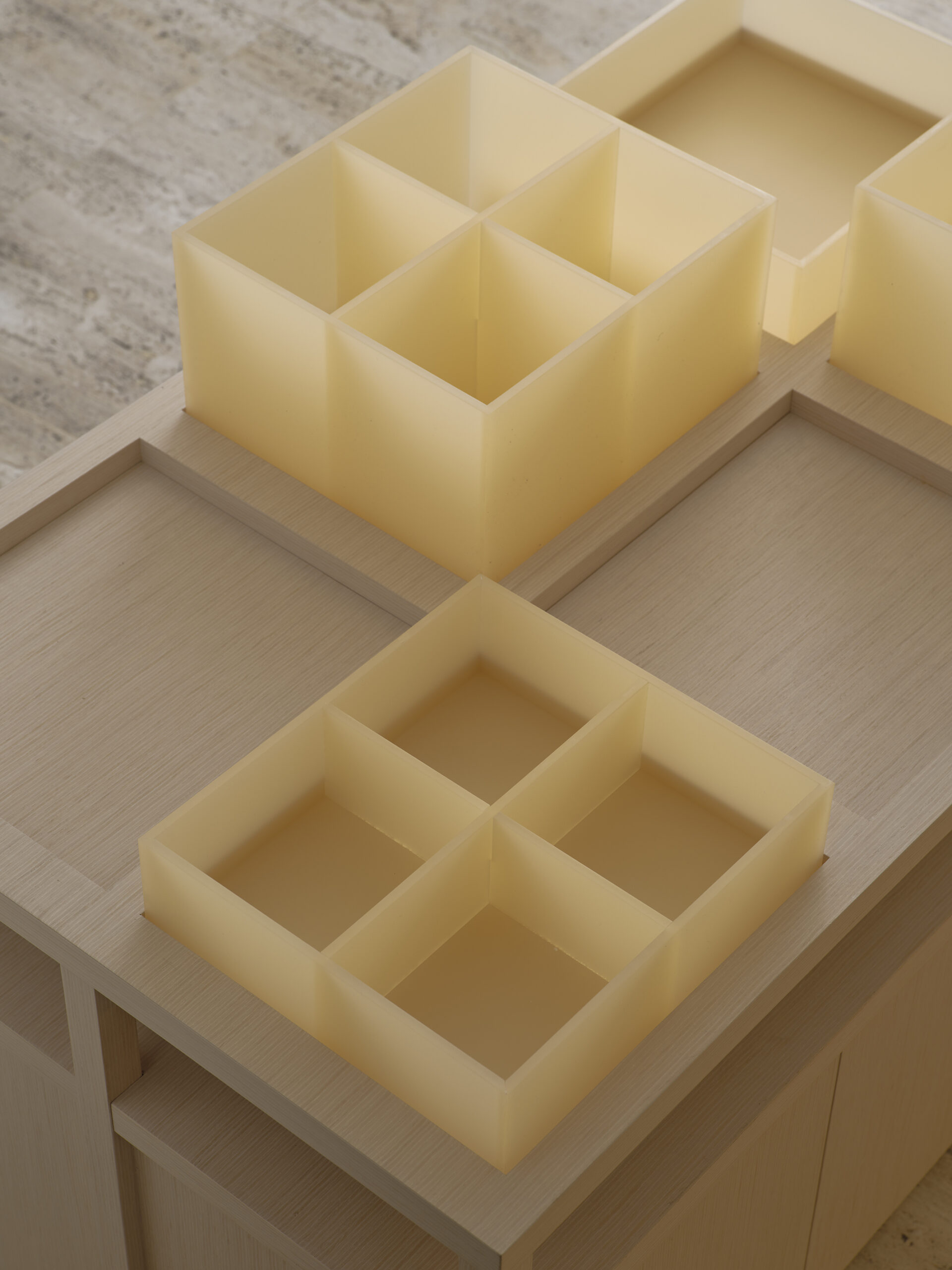
Made of the same material, though thinner—and therefore slightly less opaque—are the boxes used to organize the products inside or, when turned upside down, serve as excellent display stands that allow the products to be shown at different heights. These boxes fit perfectly into the gaps in tables or shelves, thus forming part of a completely adaptable system.

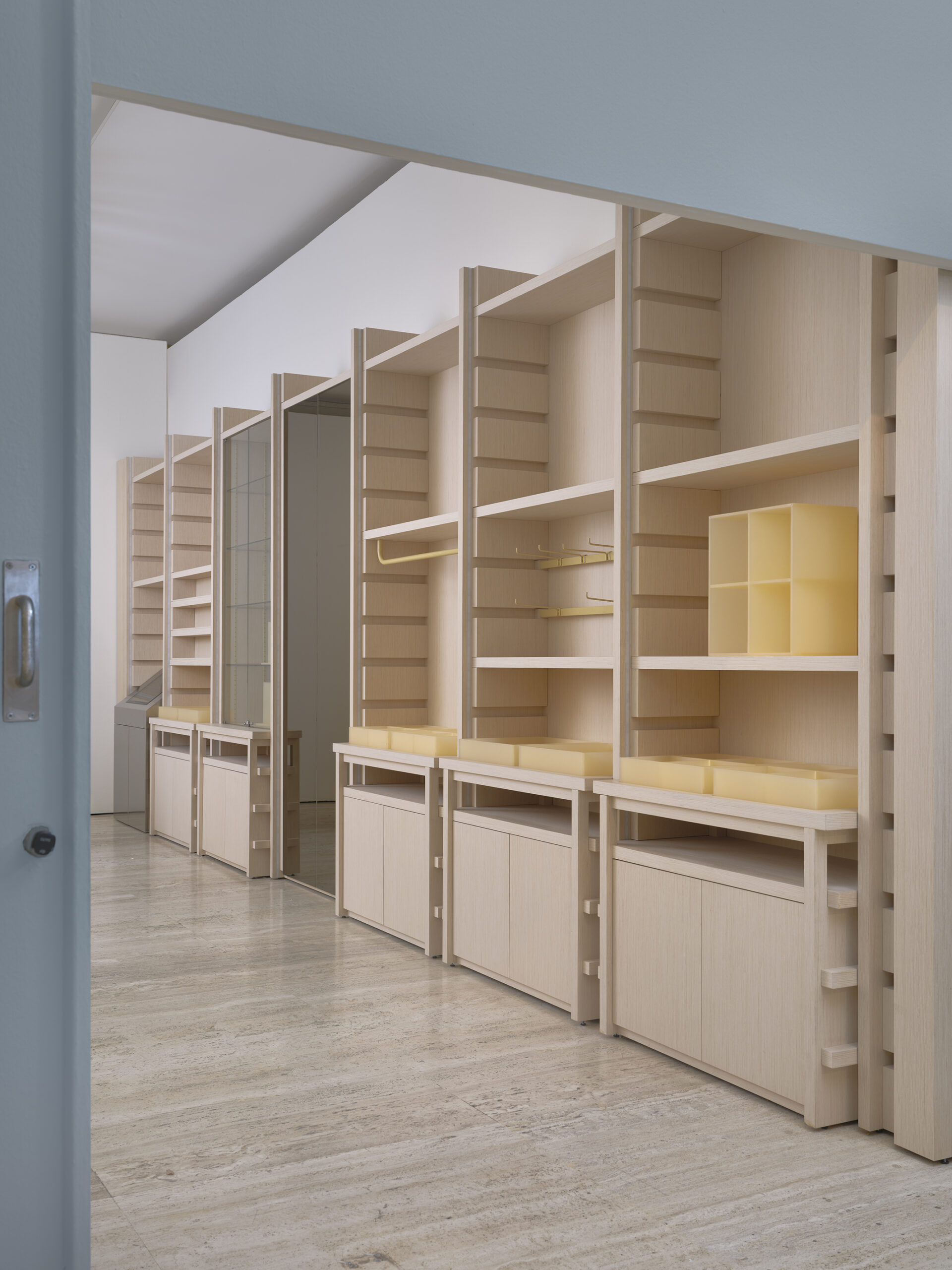
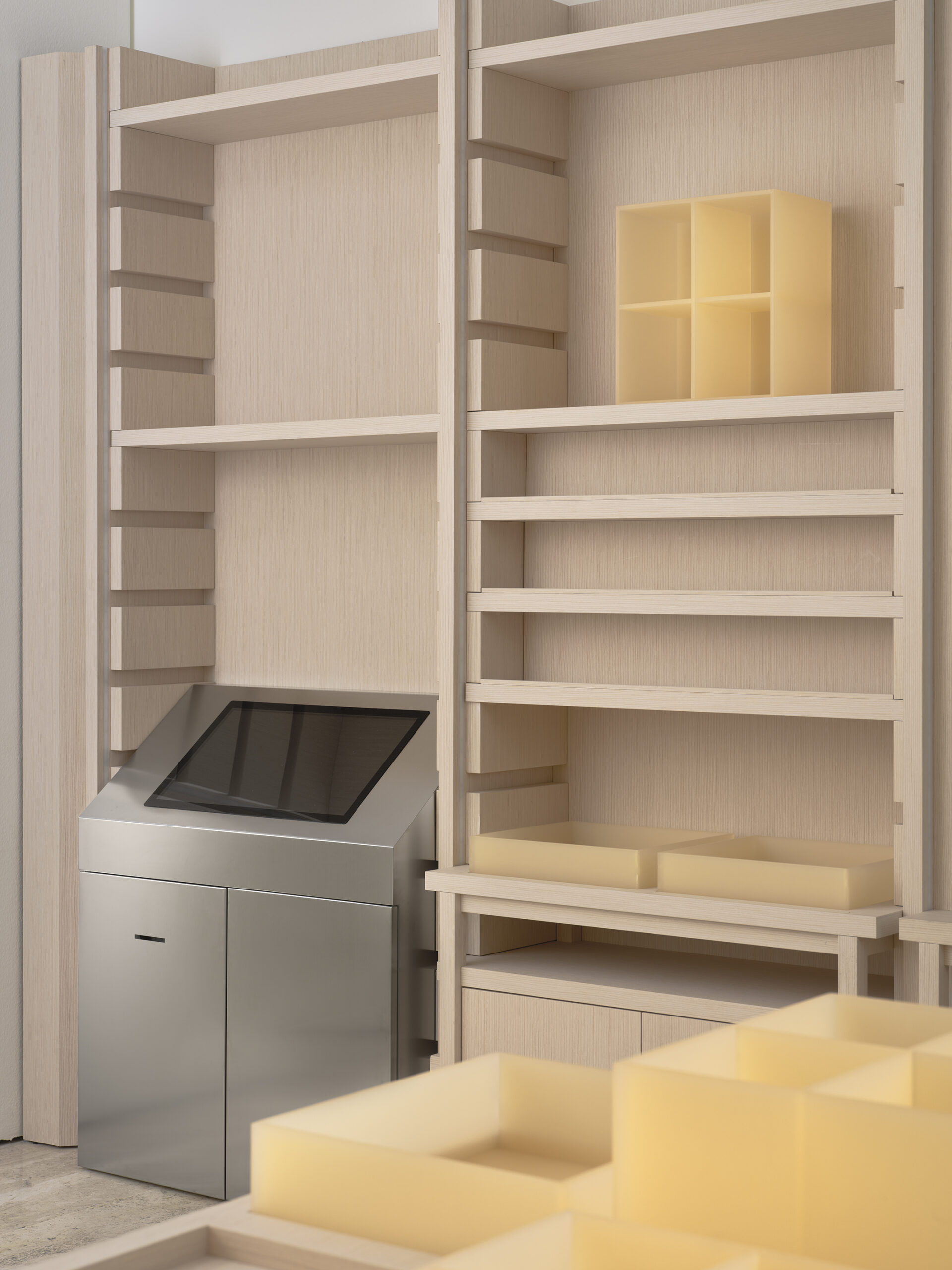
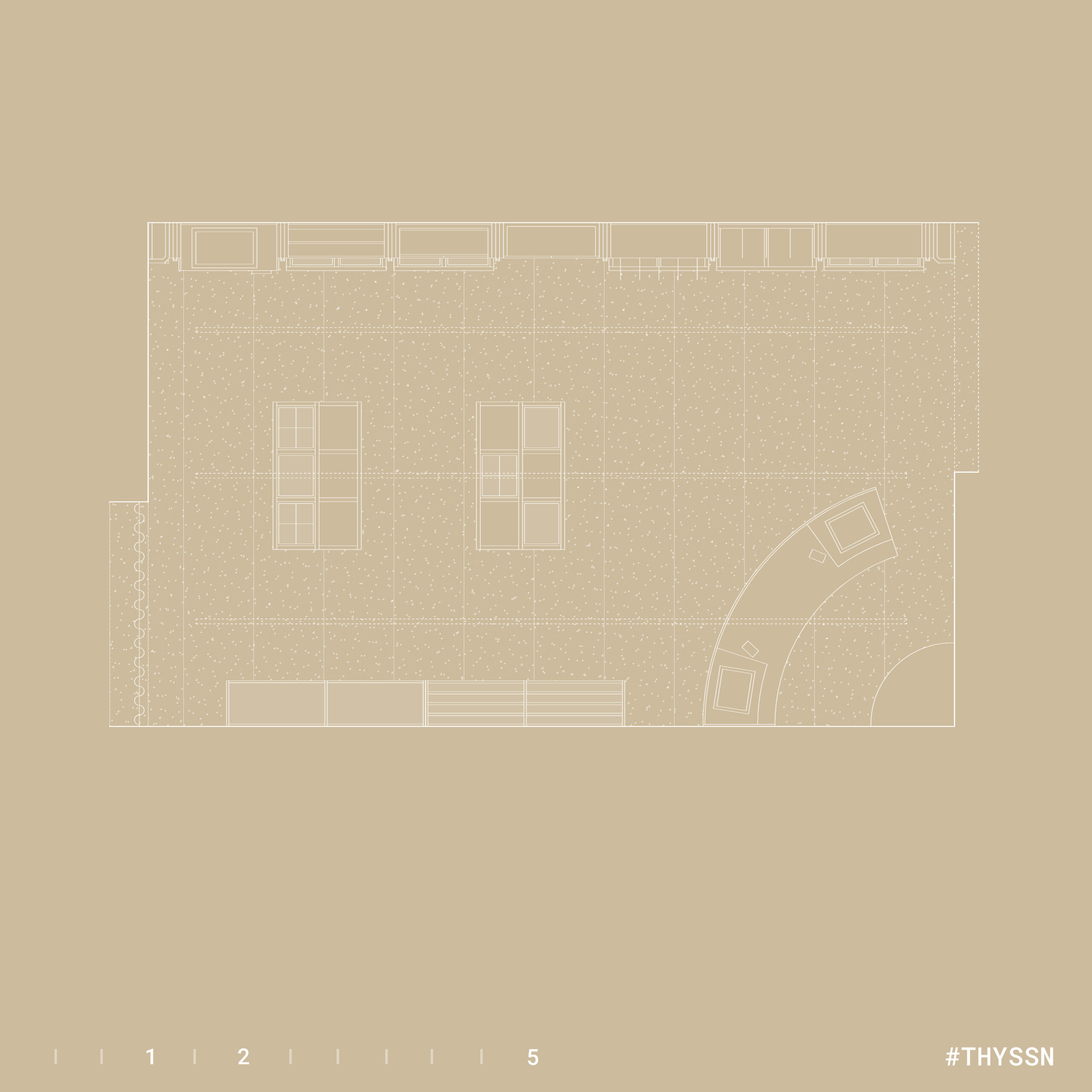
To display the various items, the studio designed a modular unit that can be modified as needed. It is positioned against the main wall and divided into six sections to house different products: on-demand printing, postcards, jewelry, and textiles, plus a display area for more decorative arrangements of various collections of items. The construction system of 4 x 4 cm slats creates a grid that adapts to the dimensions of the products and to drawers that fit into or protrude from the structure, forming eye-catching displays.

This structure is made of wood, but not just any wood: it is a whitish veneer by the Italian brand Alpi that evokes the stone floor of the museum in Colmenar. Its elongated grain creates a pattern and gives rise to an almost continuous color palette that surprises and piques the visitor’s curiosity.

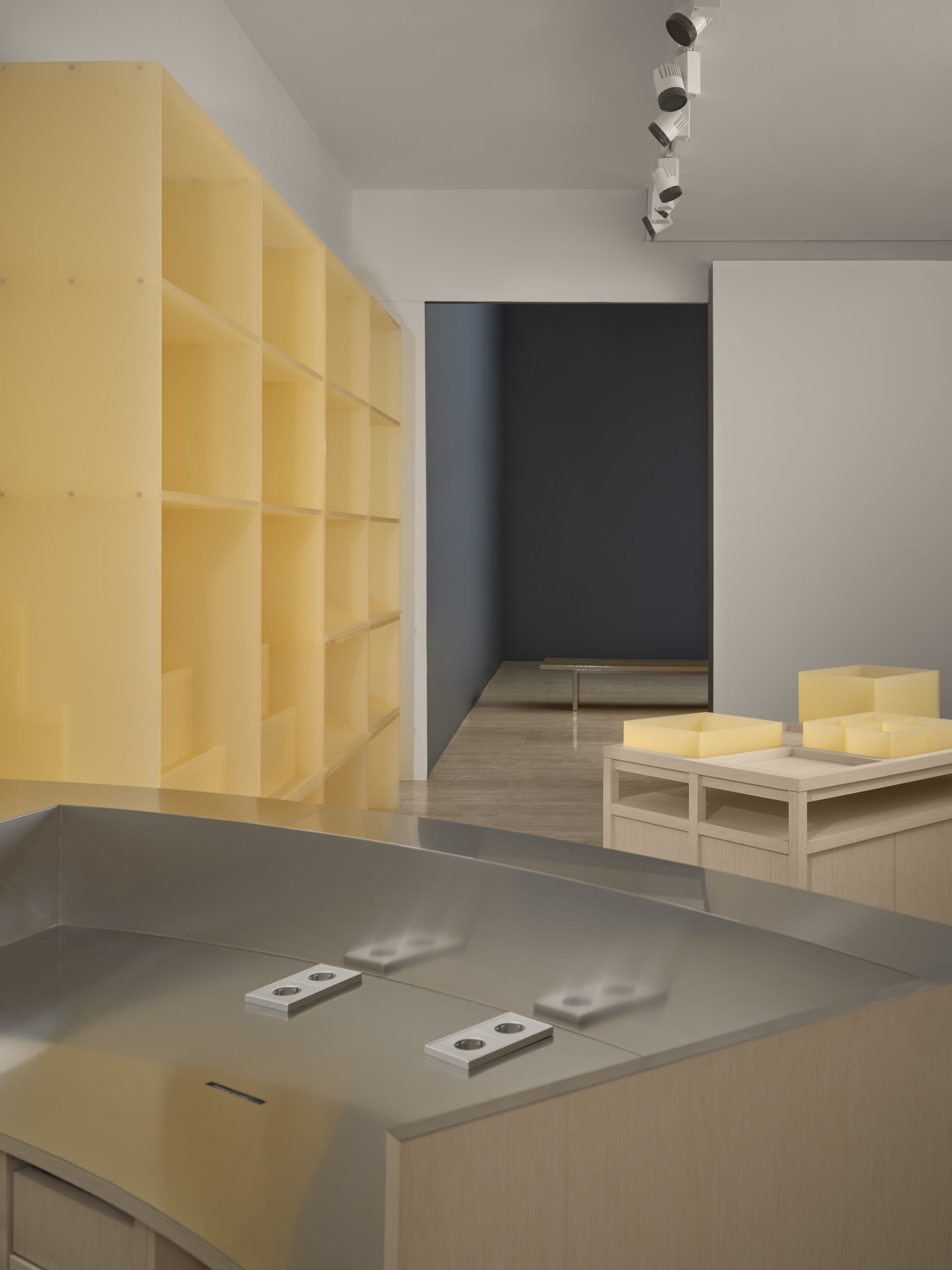
Meanwhile, stainless steel coexists with this wood, adding a contemporary and durable touch. This metallic material is found on the most-used surfaces—counters and machinery—and provides that shiny touch that reflects the warm light of the surroundings.

The ensemble is completed by a counter, also made of wood and steel, which contrasts with the orthogonality of the rest of the furniture as it is a semicircle situated in a corner of the store. Its double height creates a space accessible to all visitors.

Client: Museo Thyssen Bornemisza
Design: Plutarco
Location: Madrid
Photographs: Germán Saiz

THYSSEN STORE
STORE DESIGN

When Plutarco was commissioned to design new furniture for the Thyssen Museum’s temporary exhibition shop, the studio sought to create a system that would adapt to the needs of this unique space dedicated to product sales. Every exhibition is different, and the products created for these shows—books, limited-edition items, clothing, jewelry, posters, and more—are unique as well. For this reason, the Plutarco team set out to design furniture that could adapt and transform according to the needs of each exhibition.

The initial concept and starting point was a limited color palette, so that the setting would serve as a harmonious and cohesive backdrop, allowing the content to take center stage. To achieve this, the materials were limited to three main elements: recycled acrylic, wood, and stainless steel.

The bookshelf dominates the space with its surprise effect, standing like an ethereal sculpture thanks to its translucent quality and butter-yellow color. The 25-mm-thick methacrylate is recycled, locally sourced (manufactured in Catalonia), and unconventional. Its color is custom-made: it was designed with a certain degree of translucency to create that “frost” effect that blurs the material’s edges when it comes into contact with light. Additionally, it features an impact- and scratch-resistant finish and high rigidity.

Made of the same material, though thinner—and therefore slightly less opaque—are the boxes used to organize the products inside or, when turned upside down, serve as excellent display stands that allow the products to be shown at different heights. These boxes fit perfectly into the gaps in tables or shelves, thus forming part of a completely adaptable system.

To display the various items, the studio designed a modular unit that can be modified as needed. It is positioned against the main wall and divided into six sections to house different products: on-demand printing, postcards, jewelry, and textiles, plus a display area for more decorative arrangements of various collections of items. The construction system of 4 x 4 cm slats creates a grid that adapts to the dimensions of the products and to drawers that fit into or protrude from the structure, forming eye-catching displays.

This structure is made of wood, but not just any wood: it is a whitish veneer by the Italian brand Alpi that evokes the stone floor of the museum in Colmenar. Its elongated grain creates a pattern and gives rise to an almost continuous color palette that surprises and piques the visitor’s curiosity.

Meanwhile, stainless steel coexists with this wood, adding a contemporary and durable touch. This metallic material is found on the most-used surfaces—counters and machinery—and provides that shiny touch that reflects the warm light of the surroundings.

The ensemble is completed by a counter, also made of wood and steel, which contrasts with the orthogonality of the rest of the furniture as it is a semicircle situated in a corner of the store. Its double height creates a space accessible to all visitors.

Client: Museo Thyssen Bornemisza
Design: Plutarco
Location: Madrid
Photographs: Germán Saiz